Geirangerfjord Cruises
Is the Geirangerfjord Worth Visiting? An Honest Look
Last reviewed August 2026
Is geirangerfjord worth visiting? Yes, if you give it a full boat trip and pick your month, and less so if you are stopping for two rushed hours between a bus and a gift shop. This 15-kilometre UNESCO fjord earns its reputation on the water, not from the car park above it, and catalog day options here span $57.64 for a one-hour boat to $322.69 for a full winter day from Ålesund. The honest picture includes cruise-ship crowds, a village that takes twenty minutes to see on foot, and waterfalls that thin out after a dry spell. Below are the real costs, what a trip actually contains, and who should spend their one Norway day somewhere else.
Quick answer
The Geirangerfjord is worth visiting for almost anyone who gets on the water, ideally between late May and early July when the waterfalls run full on snowmelt. It is a weaker trip for a two-hour cruise-ship stop crammed into the midday crowd, or a late-summer visit after a dry spell has thinned the Seven Sisters.
Key takeaways
- Boat trips here range from $57.64 for a one-hour cruise to $322.69 for a full winter day from Ålesund
- The fjord and Seven Sisters share UNESCO status with Nærøyfjord, 200 km away
- Snowmelt drives the biggest waterfall flow from May into early July
- Every tour compared here carries free cancellation up to 24 hours out
- Local boats from Geiranger Fjordservice run from 660 NOK, June through September
- Cruise-ship days pack the village and first departures by mid-morning; see what those hours actually look like
The Short Answer
Worth it, on the water and in the right month
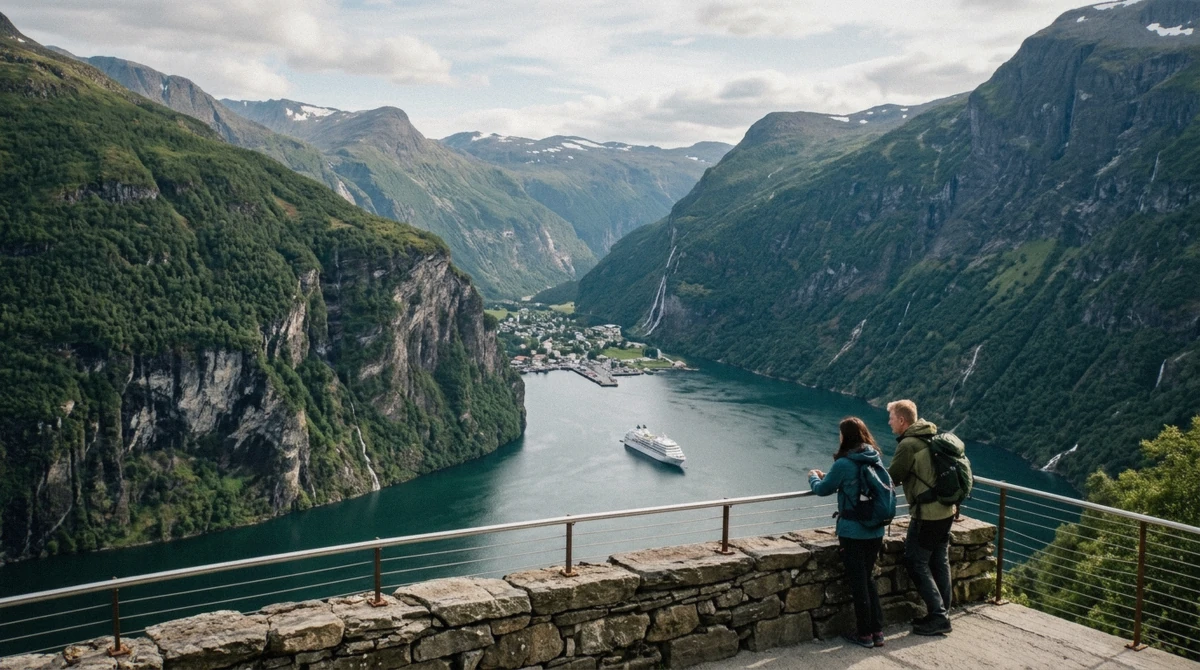
The Geirangerfjord is one of two fjords carrying Norway's UNESCO World Heritage listing, and the reason is visible from the deck of any boat that runs it: near-vertical walls, farms perched hundreds of metres up, and the Seven Sisters dropping in ribbons where the rock face curves. None of that reads the same from a road pull-off. The fjord earns its name on the water, and every trip we compare here puts you on it.
The honest caveat is timing. Arrive on a heavy cruise-ship morning in July and you share the village with several thousand other people. Arrive after a dry August week and the tallest sister can run thin, closer to five falls than seven. Neither ruins the trip, but both change what you get for the money.
- Worth it if: you can spend at least an hour on the water, you have some flexibility on month or time of day, you want to see the Seven Sisters and Skageflå farm up close, you are already routing through Møre og Romsdal or stopping by cruise ship
- Skip it if: your only window is a rushed two-hour midday stop with no boat time, you are chasing an empty, crowd-free fjord in peak July, you cannot manage boarding a boat from a quay, you would rather spend the day on Nærøyfjord instead and cannot do both
What It Actually Costs
From a local ticket window to a full day from Ålesund
Prices below are as of August 2026. The spread runs from a cheap local sightseeing ticket bought at the tourist information office to a full guided day that includes lunch and a second town.
| Option | Typical price | Duration | Best for |
|---|---|---|---|
| Local sightseeing boat (Geiranger Fjordservice) | from 660 NOK (~$65) | 75 min to 2 hours | Independent travelers buying on the day |
| Geiranger–Hellesylt ferry | from 390 NOK (~$38) | about 65 minutes | Point-to-point travelers, or see the full ferry guide |
| Waterfall-tasting cruise | from $57.64 | 1 hour | Cheapest booked boat departure on the fjord |
| RIB fjordsafari | from $93.80 | 1 hour | Close-range spray and speed, max 12 per boat |
| Winter cruise from Ålesund | from $322.69 | 9 hours | Off-season visitors, autumn through spring |
Reading that table honestly
Most visitors land somewhere in the middle: a one-hour boat departure from Geiranger itself, priced between $57 and $95, covers the core of what makes the fjord worth the trip. The jump to $200 to $322 buys a full day that starts from Ålesund instead of Geiranger, useful if you are not already staying in the village. What drives the spread is mainly starting point and boat time, not the scenery itself, which every option on the water shares.
What You Get for the Money
The trip itself
Most boats leave from the quay area in Geiranger village, population around 250, and head out past Geiranger Brygge into open water within minutes. The walls close in fast, farms come into view on ledges hundreds of metres up, Skageflå among them, worked until the 1960s and now a hiking stop reachable from some boats. Then the Seven Sisters appear on one side and the Suitor opposite, both falling straight off the cliff face rather than down a slope.
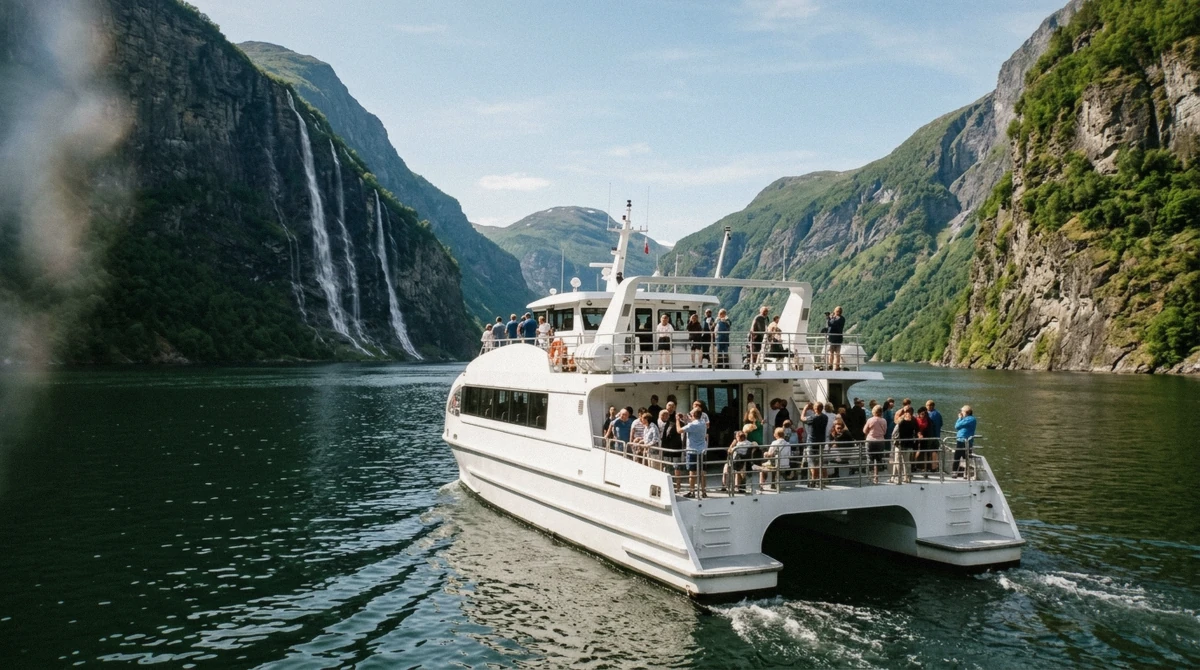
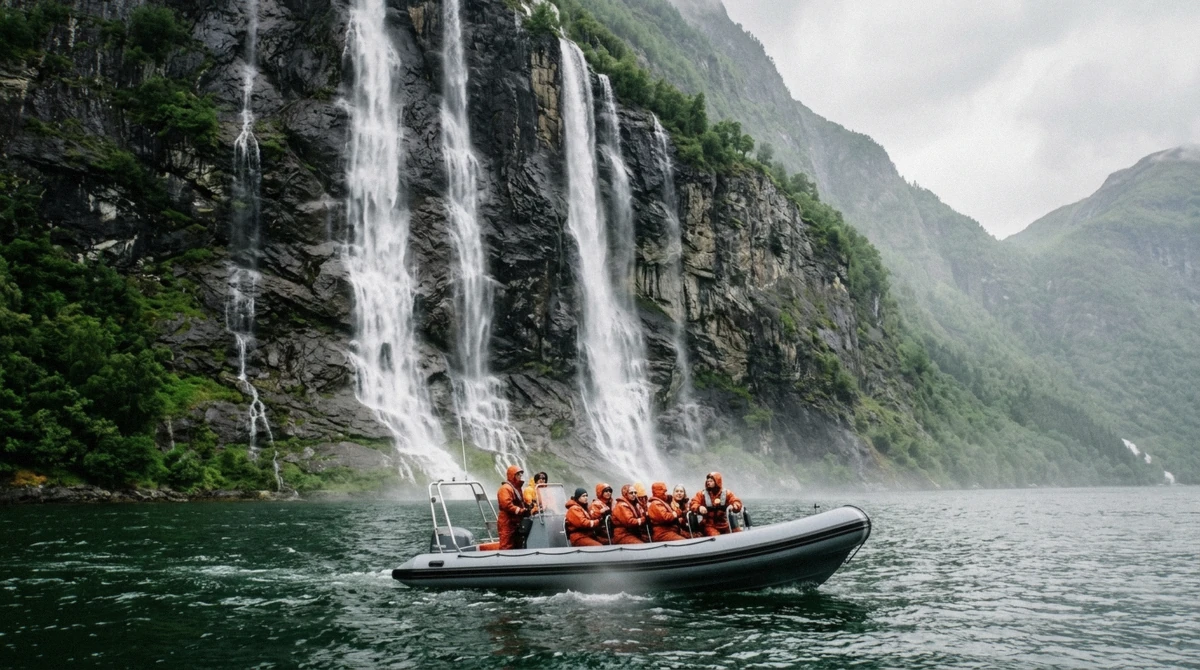
On the closer-range RIB trips the boat noses in near enough to feel the spray; on the sightseeing catamarans you watch from a covered or open deck with a guide narrating the farms and the waterfall names. Either way the sequence is the same: village, cliffs, Seven Sisters, Suitor, and on some routes a stop at Bridal Veil or a swing toward Hellesylt at the far end.
What is included varies by tour but typically covers the boat itself, a guide or recorded commentary, and on some departures a water-tasting stop straight from the Friaren waterfall. Food, drinks beyond a snack bar, and any land excursion (Dalsnibba, the zipline park) are usually separate.
The Honest Downsides
What actually disappoints people
None of these are dealbreakers on their own, but they change the experience enough to name plainly.
- Cruise-ship days pack the village. Geiranger is one of Norway's busiest cruise calls, and on a ship day the quay, the first boat departures and the village shops fill fast; arriving on a non-ship day or booking an early or late slot avoids most of it
- The waterfalls are weather-dependent. One reviewer described the Seven Sisters after a dry spell as 'more like 5' visible falls, an honest gap between the postcard and a late-summer reality
- The village itself is small. Geiranger has around 250 residents and a compact centre; once you are off the water there is not much more than an hour of wandering
- Weather can turn fast in a fjord this deep and narrow, and open-deck boats and RIBs mean real exposure to wind and spray even on a calm-looking day
- A short cruise-ship stop rarely leaves time for both a boat trip and the viewpoints above the village, so the two-hour visitor usually has to choose one
When It's Worth It Most
The window that matches the photos
Late May into early July is the strongest stretch, when snowmelt keeps the Seven Sisters running at full volume and the local boat fleet is operating. The village fleet runs June through September; outside that window the winter cruise from Ålesund is the one option that still gets you onto the fjord. For the full month-by-month breakdown, including temperatures and crowd patterns, see our best time to visit Geirangerfjord guide.
Geirangerfjord vs. Nærøyfjord
Not really an either-or on the same day
Norway's other UNESCO fjord, Nærøyfjord, sits roughly 200 km away, far enough that no single-day boat covers both, so the comparison matters mainly for planning which region to base in rather than which is objectively better; the full comparison lays out the difference in scale and access.
Who Should Do It
If You have a full day and want the classic view
Book a one-hour or 75-minute boat from Geiranger village, ideally in the late-May to early-July window
If You are on a cruise ship with a short call
Prioritize a boat trip over the viewpoints; check the cruise-day rhythm before you plan your hours ashore
If You want close-range spray and some speed
Take the RIB fjordsafari or the guided RIB, both under 1.5 hours and max group sizes
If You are visiting outside June to September
The winter cruise from Ålesund is the one boat option that still runs
If You cannot board a boat from a quay, or need step-free access
Consider the wheelchair-accessible sightseeing catamarans, which carry designated spots, rather than the RIBs or kayak tour
The Case For and Against
What we genuinely like
- A UNESCO-listed fjord with near-vertical walls and waterfalls visible from the water
- Boat options start under $60, cheaper than most people assume
- Free cancellation up to 24 hours on every tour compared here
- Multiple boat lengths, from a 1-hour taste to a full guided day
- Runs year-round via the winter option, not just in summer
The honest downsides
- Cruise-ship days crowd the village and the first departures
- Waterfall flow can thin noticeably after a dry stretch
- The village itself has little to fill a full day beyond the boat trip and a short walk
- Open decks and RIBs mean real wind and spray exposure
- A rushed two-hour stop rarely fits both a boat trip and the viewpoints above
Who it's NOT for: Travelers with only a two-hour window who want both the water and the viewpoints, and anyone chasing a crowd-free fjord on a peak cruise-ship day.
How to Book Without Overpaying
What we would book
For a first visit with time to spare, the waterfall-tasting cruise at $57.64 covers the core view for the least money. Travelers who want more speed and closer spray should look at the RIB fjordsafari at $93.80. Anyone visiting outside the June-to-September boat season should go straight to the winter cruise from Ålesund, the only fjord option running then.
All of these carry free cancellation to 24 hours out, worth using if the forecast turns. To see every option side by side rather than book the first one you find, compare every Geiranger fjord cruise on our homepage.
Questions About Whether Geirangerfjord Is Worth It
How much does a Geirangerfjord boat trip cost?
From $57.64 for a one-hour sightseeing cruise up to $322.69 for a full winter day from Ålesund, as of August 2026. A local sightseeing ticket bought on the day starts from 660 NOK, about $65.
Is Geirangerfjord too crowded to enjoy?
On a busy cruise-ship morning the village and first departures do get crowded, but the fjord itself is wide enough that a boat trip rarely feels packed once you are on the water. Booking an early or late departure avoids most of the midday crush.
How long do you need at Geirangerfjord?
A one-hour boat departure covers the essential view; two to three hours lets you add a village walk or the water-tasting stop. A full day from Ålesund, closer to nine hours, adds a second town and a light lunch.
Why do some visitors leave disappointed?
The two most common reasons: a short cruise-ship stop that left no real boat time, and a dry-spell visit where the Seven Sisters ran thin, 'more like 5' according to one traveler review. Both are avoidable with a longer window or a wetter month.
Can you see the Seven Sisters without a boat?
Only partially, from certain viewpoints above the village; the close-up view that most photographs show comes from the water. Boat trips from Geiranger pass directly beneath the falls.
Is Geirangerfjord worth it if I've already seen other Norwegian fjords?
It still holds up on its own terms, particularly the concentration of waterfalls in a short stretch of water, but if you have limited time and have already done a comparable fjord cruise elsewhere, weigh it against how much your itinerary already covers.
Is there a cheaper way to see the fjord than a tour?
Yes. The local Geiranger Fjordservice boats, bought at the tourist information office, start from 660 NOK and run the same core route as the booked tours, though without English commentary on every departure.
The honest read is simple: give the fjord real boat time in a month with good water flow, and it earns the reputation. Rush it into a two-hour stop or hit it after a dry week and you still see something worthwhile, just not the postcard version.